
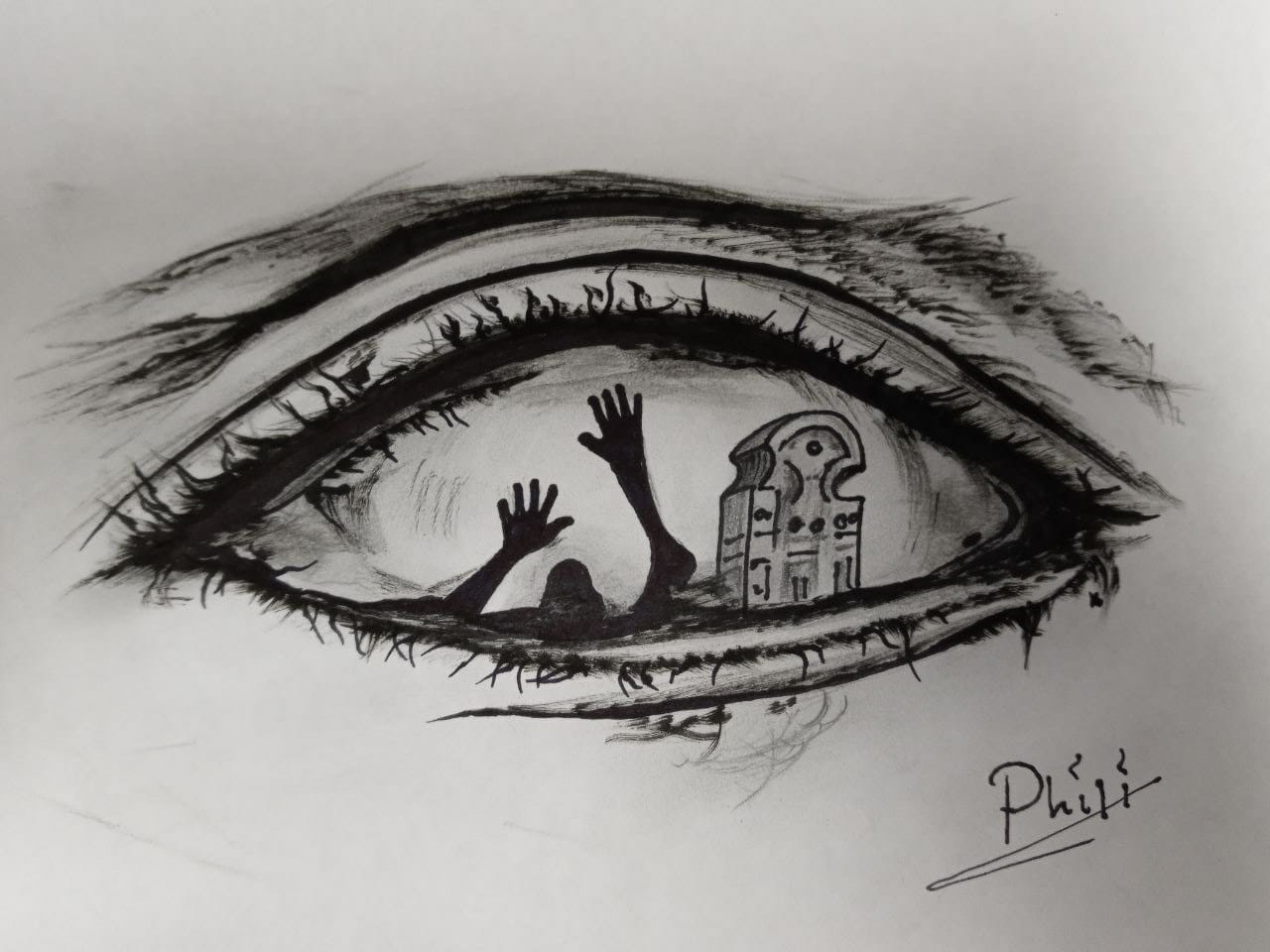
Trigger Warning: This article contains graphic accounts of sexual violence and gender-based violence in times of war. Reader discretion is advised.
Gender-Based Violence in the Ethiopia-Tigray Conflict
Sexual violence has long been used as a brutal weapon of war—an intentional strategy to inflict physical and psychological harm, break communities, and assert dominance. In the Ethiopia-Tigray conflict (2020-2022), it was widespread and systematic, leaving deep scars that endure long after the fighting has stopped.
Gender-based violence (GBV) refers to any physical, sexual, psychological, or economic harm inflicted on a person because of their gender. While women and girls bear the brunt, men and boys can also be victims. Rooted in power imbalances, gender inequality, and entrenched social norms, it continues to be a devastating tool in armed conflict.
During the war in Tigray, sexual violence was perpetrated by multiple parties. Survivors have shared accounts of mass rape and forced impregnation. Some were deliberately infected with HIV/AIDS. Others were mutilated with metal rods and sticks—attacks intended not only to injure, but to sterilise. In some of the most harrowing cases, victims were coerced into raping their own relatives.
Severe Psychological, Physical, and Social Implications
These acts are not just individual crimes. They are war crimes meant to destroy the social fabric of a people. Many survivors endure severe psychological trauma, including post-traumatic stress disorder, depression, panic attacks, substance abuse, suicidal thoughts, and obsessive-compulsive behaviours. For some, the violence has stripped away their sense of self, dignity, and humanity. The collective trauma will have long-term and intergenerational impacts on individuals, families, and communities.
“…even dogs are treated better than me! What am I? I am less than a dog in the street.”
The physical consequences have been equally devastating. During the two-year blockade and siege of Tigray, access to healthcare was near-impossible. Many survivors went without treatment for serious injuries. Chronic pain, infections, and reproductive health complications remain unaddressed, deepening their suffering.
“I still have a yellowish fluid coming out of me, which has a very strong, bad smell. I feel ashamed when my child comes close to my dress. I have pain in my womb that feels like someone is poking me with sharp items. I isolate myself even from my family members due to this. I do not sleep much. If it weren’t for my children, I would wish not to wake up.”
The violence has also eroded the social cohesion of Tigrayan society. Many women have been abandoned by their partners after disclosing they were raped, left to shoulder the burden alone. Children have also been rejected by their fathers in an attempt to avoid social stigma. Despite being victims of war crimes, survivors often face discrimination in their communities and many have been ostracised. Thousands have been displaced and are now living in camps where they are vulnerable to further abuse and exploitation.
This article shares testimonies from survivors of the Ethiopia-Tigray conflict collected by a clinical therapist working in the region between November 2020 and June 2021.
Rape in Front of a Family Member
Mihret, a 27-year-old mother of two, once lived in Sheraro town in northwestern Tigray. She now resides in a camp for internally displaced persons. During the war, she was publicly gang-raped by three soldiers.
“I couldn’t comprehend what was happening! The soldier raped me anally while I held my daughter on my back. My son was forced to watch, and he was crying out loud. The second soldier replaced the first one once he had had enough, and then the third one continued. I began to bleed from my buttocks. It was my son who saw me bleeding first. He used all the power he had and cried loudly, ‘Leave her alone! You made my mom bleed!’”
Child Rape
Women and girls of all ages were raped during the conflict. Some children died as a result of the assaults. Mesouda was only 11 years old when she was snatched from her mother’s arms by five soldiers. Her mother recounts:
“It was around December. They came to our house asking for Siwa (traditional home brewed beer). I stated I am Muslim, and I do not brew alcohol. They were not happy. They asked my 11-year-old to come closer. I begged them. They put their gun in one of my eyes and told me to move. I did not know what to do other than being quiet. They removed my eyeball and raped her… (crying out loud).”
Raping Victims with Objects
Survivors were also raped with inanimate objects, such as sticks, metal rods, and umbrellas. Several reported that perpetrators used these objects to deliberately mutilate their bodies and permanently damage their reproductive organs to sterilise them.
“He brought a large metal [bar] and handed it over to his boss. I could not understand why. I never assumed they would insert it into my sensitive area. I started screaming and begging. I cannot even describe the pain. I cannot!”
“After raping me, they brought a stick with different branches on it. I was in pain and my mind was not working at all. I could not predict what the next atrocity would be. He said, ‘You should never give birth again, let us damage this ***** womb.’ I cannot tell you what happened after that, my daughter.”
Deliberately Infecting and Impregnating Victims
Some survivors testified that rape was carried out with the intent to infect them with sexually transmitted infections and diseases.
“I plead not be raped because I do not want to be infected with HIV. They started laughing and said, ‘Let us call ***.’ They called a guy with HIV. They told him to rape me. They were all giggling. I do not know what was funny about that. I was crying like crazy and screaming. Two of them held me on each side and he raped me.”
“I told them my husband might have HIV. I thought it would prevent me from being raped. They looked at each other and laughed. They said, ‘If your husband did not give you HIV, we will give it to you now. You will give birth to a hybrid child from us with AIDS.’ I could not believe what I was hearing.”
A Culture of Impunity
The implications of this widespread sexual violence against women have been largely overlooked in peace and post-war negotiations in Tigray. Legal support for survivors remains minimal, and access to mental health and recovery services is scarce to non-existent.
Justice mechanisms—such as truth and reconciliation processes—are vital for healing, not only for individuals but for entire communities. Public education about GBV can help mitigate the stigma survivors face and foster an environment where accountability becomes possible. Yet, these steps have not been taken. Instead, women are left in a limbo of unresolved pain and silence.
Ending impunity is essential. Legal systems must criminalise all forms of GBV and prosecute perpetrators at every level. Without justice, these crimes will continue to be repeated. Survivors of GBV in Tigray deserve more than our sympathy; they deserve recognition, healing, and justice. Their pain must not be pushed to the margins. Their voices must not be forgotten.
Disclaimer: All interviews were recorded with the participants’ permission and all names have been changed.
Author: Feven Teclehaimanot Araya is a Licensed Clinical Psychologist, lecturer, and Gender-Based Violence specialist. During the Tigray war, she provided mental health and psychosocial support to survivors. She holds a BA in Psychology and an MSc in Clinical Psychology, and is authoring a book on treating survivors of conflict-related sexual violence.

No comment